
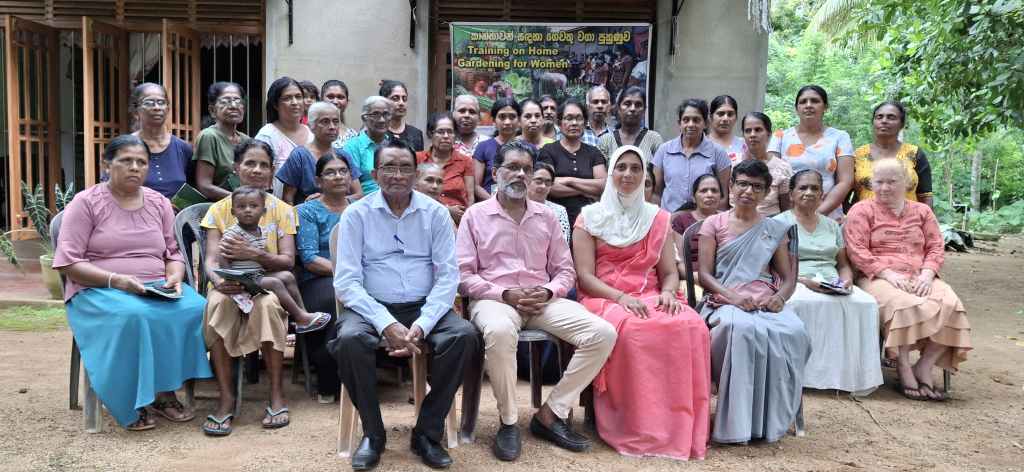
Empowering 300 Women to Feed the Future
- Women-Led Sustainable Agriculture Initiative
To: Korea SHE Foundation
From: Institute for Development of Community Strengths (INDECOS)
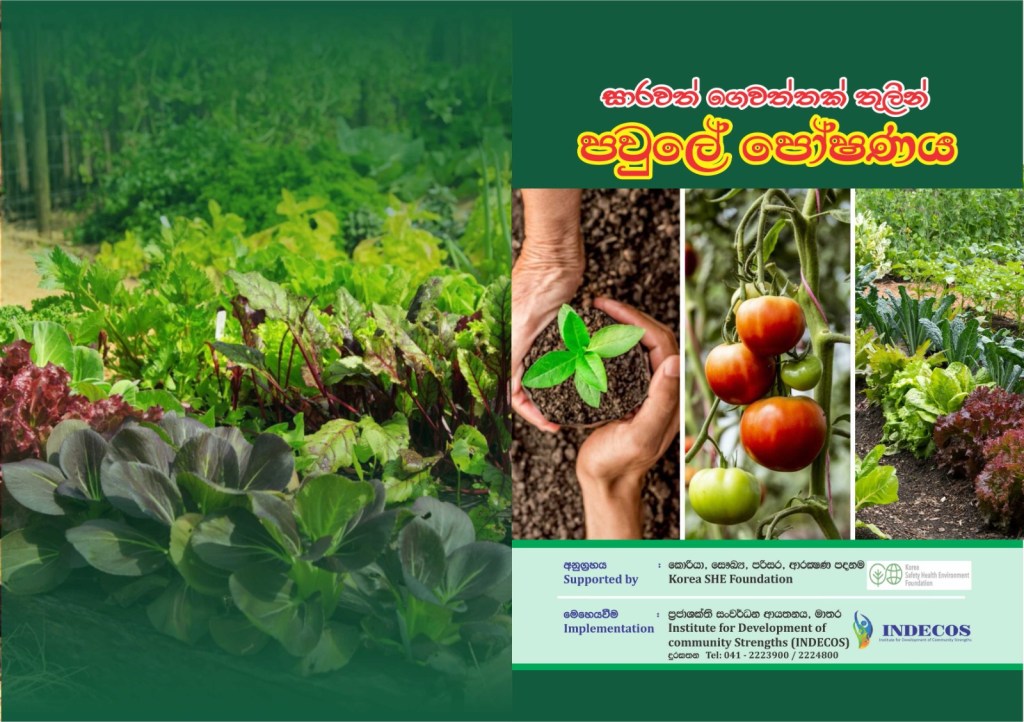
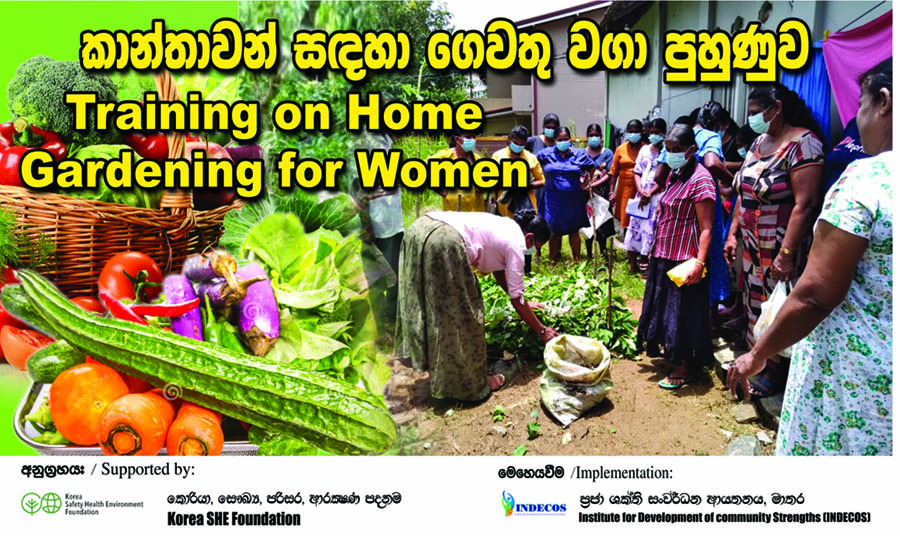
Project Title: Promoting Composting and Kitchen Gardening for Safe and Sustainable Food Production
Location: Matara District, Sri Lanka
1. Executive Summary
In response to the escalating national nutrition crisis and soaring food costs in Sri Lanka, INDECOS successfully implemented a backyard agricultural revolution. By shifting the focus of food production to women, the initiative has stabilized household food security for nearly 300 families. This report details the transition from external dependency to localized self-reliance.
2. The Core Philosophy
The project was built on the principle that food security is a gendered issue. As the Director of INDECOS stated:
“Our goal wasn’t just to plant seeds in the ground, but to plant the seeds of self-reliance. When a mother controls her food source, the whole family eats better.”
By challenging the narrative that agriculture is a male-only domain, INDECOS empowered women to become the primary architects of their family’s health.
3. Key Performance Indicators (KPIs)
Indicator
Impact Data
Primary Beneficiaries
298 Women professionally trained in organic farming
Secondary Beneficiaries
1,000+ Family members with daily access to nutrition
Project Resilience
85% Success rate in garden establishment (post-monsoon)
Input Quality
100% Chemical-free seeds and organic compost distributed
Export to Sheets
4. Project Implementation & Outcomes
A. Professional Agricultural Training
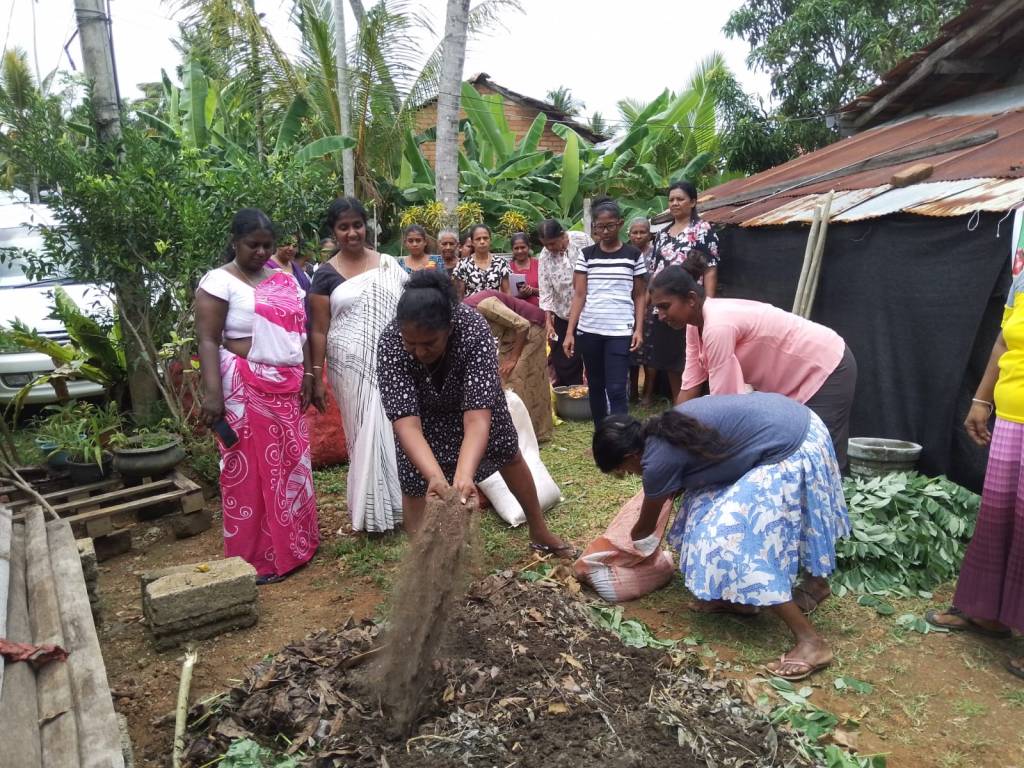
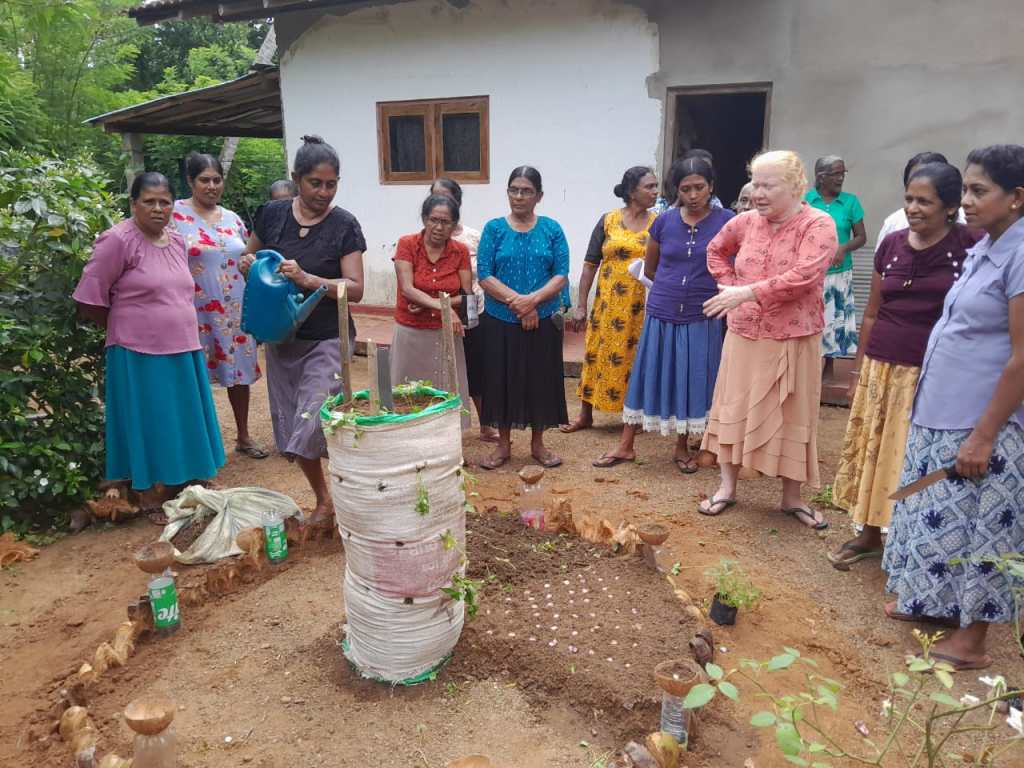
Participants were not merely given seeds; they were provided with professional-grade agricultural education. This included soil management, organic composting, and pest control techniques that bypass the need for expensive, imported chemical fertilizers.
B. Overcoming Climate Challenges
The Matara District faced heavy monsoon rains during the implementation phase. However, the technical training provided allowed 85% of the gardens to survive and thrive. This resilience proves that localized, well-managed kitchen gardens are a viable solution to climate-related food shocks.
C. Nutritional & Economic Security
By turning “neglected plots of land into vibrant, life-giving gardens,” the project has provided a direct buffer against inflation. Families now have a consistent supply of chemical-free vegetables, reducing household expenditure and improving long-term health outcomes.
5. Lessons Learned & Future Scaling
The “Mother-Centric” Model: Centralizing food control with mothers ensures that the harvest is used primarily for household nutrition rather than being diverted to external markets.
Organic Resilience: Organic compost improved soil structure, which was crucial for surviving the heavy monsoon rains that typically wash away chemically treated topsoil.
2. Project Portfolio: Home Gardening & Nutrition
Sustainable Agriculture for Community Resilience
Project Overview This project was designed as a direct response to the economic hardships in Sri Lanka, which have made nutritious food inaccessible for many low-income families. By focusing on women-led agriculture, we address both food security and economic empowerment simultaneously.
Core Pillars of the Program
- Technical Mastery: Training led by expert female agricultural officers from the Department of Agriculture, covering soil health, organic composting, and pot cultivation.
- Practical Learning: Sessions were held directly in community gardens, ensuring hands-on experience in real-world conditions.
- Resource Support: Each participant received a “Starter Kit” including high-quality seeds, vegetable plants, and organic fertilizer.
- Ongoing Mentorship: A team of 09 female field officers provides follow-up visits to ensure the longevity of each garden.
Key Achievements
| Feature | Impact |
|---|---|
| Nutrition | Improved dietary diversity for children and nursing mothers. |
| Economic | Significant household cost savings and potential for surplus sales. |
| Environment | Promotion of 100% organic, chemical-free farming and waste composting. |
| Social | Challenging gender norms by positioning women as agricultural leaders. |
Export to Sheets
Help Us Scale Our Impact
The success of the Matara pilot program has generated immense demand. Our goal is to expand this model to reach 500 new women annually, eventually scaling to 750 participants across 25 training programs per year.
How we plan to grow:
- Market Linkages: Establishing village fairs and delivery services for surplus organic produce.
- Youth Engagement: Tailoring programs to involve younger women in sustainable Ag-Tech.
- Advanced Composting: Moving toward community-scale organic fertilizer production.
Support our Mission A small investment of USD 3,000 helped nearly 300 families achieve food security. Imagine what we could do with your support.
[ Donate to INDECOS ] [ Partner With Us ] [ Read the Full Report ]
Suggested Social Media Captions
- Instagram/Facebook: From neglected soil to nutritious meals! 🥗 INDECOS is proud to share the success of our Matara Home Gardening project, where 298 women are now leading the way in organic farming.
- LinkedIn: Addressing food insecurity requires local solutions. INDECOS successfully implemented a $3,000 pilot project in Sri Lanka, empowering rural women through agricultural training and organic composting. We are now seeking partners to scale this to 750 families per year.
 Institute for Development of Community Strengths
Leave a comment